
Peres Jepchirchir and the EPO Sample: Sydney's Win, Tokyo's Gold and the Date That Decides Everything
**मुख्य उत्तर:** केन्याई मैराथन धाविका पेरेस जेपचिरचिर को एथलेटिक्स इंटीग्रिटी यूनिट (AIU) ने अनंतिम रूप से निलंबित किया है, क्योंकि 30 अगस्त 2026 की सिडनी मैराथन से पहले केन्या में लिए गए आउट-ऑफ-कॉम्पिटिशन नमूने में EPO पॉज़िटिव पाया गया। **मुख्य तथ्य:** - 33 वर्षीय जेपचिरचिर ने सिडनी मैराथन 2:18:31 में जीती, चेपताई से तीन मिनट से अधिक आगे। - नमूना दौड़ से पहले केन्या में लिया गया; अनंतिम निलंबन अंतिम दोषसिद्धि नहीं है। - वह 2020 टोक्यो ओलंपिक (दौड़ सापोरो में) और सितंबर 2025 विश्व चैंपियनशिप की मैराथन स्वर्ण विजेता हैं। - उनके अन्य खिताब: न्यूयॉर्क 2021, बोस्टन 2022, लंदन 2024; सिडनी 2025 में सातवाँ विश्व मैराथन मेजर बना था। **स्रोत:** एथलेटिक्स इंटीग्रिटी यूनिट (AIU) की आधिकारिक अधिसूचना; घटना-तिथि 30 अगस्त 2026 (सिडनी मैराथन) | Cross-checked: cricsultan.com **संबंधित प्रश्नोत्तर:** प्रश्न: क्या पेरेस जेपचिरचिर की सिडनी जीत अभी रद्द हुई है? उत्तर: नहीं — बी-नमूना और सुनवाई की प्रक्रिया बाकी है, और परिणाम रद्द करने का फ़ैसला नमूना लिए जाने की सटीक तारीख़ पर निर्भर करेगा। प्रश्न: EPO क्या है और यह कितने समय तक पकड़ में आता है? उत्तर: EPO किडनी में बनने वाला हार्मोन है जो लाल रक्त कोशिकाओं का उत्पादन बढ़ाता है, और इंजेक्शन के रूप में यह यूरिन या रक्त में केवल एक छोटी अवधि तक पहचाना जा सकता है। प्रश्न: क्या इसका असर सितंबर 2025 के विश्व चैंपियनशिप खिताब पर पड़ सकता है? उत्तर: यह नमूने की सटीक तारीख़ पर निर्भर करता है, जिसे एथलेटिक्स इंटीग्रिटी यूनिट ने अभी सार्वजनिक नहीं किया है।
At 5:40 on the morning of 30 August 2026, the elite women's field stood at the start line on the Sydney waterfront, surrounded by the usual major-marathon crowd: phones, coffee, and people who came only for the finish-line photograph. Two hours, eighteen minutes and thirty-one seconds later, the board carried the name of Peres Jepchirchir. Behind her, more than three minutes back, was her compatriot Irene Chepet Cheptai.
The vial that held the truth about that morning had already left Kenya.
The Athletics Integrity Unit later announced that Jepchirchir, 33, had been provisionally suspended after an out-of-competition sample collected in Kenya before the race returned an adverse finding for EPO. The sequencing matters. The sample was sealed before she ran. The result arrived after the flowers.
I learned to wait in corridors — the story usually walks past at eye level, not at a podium. In this case the story is a date, and nobody outside the file currently holds it.
What the record book already says
Jepchirchir's career resists compression. Olympic marathon gold at Tokyo 2026 — technically run in Sapporo, 800 kilometres north, where the race was moved to escape the heat. A world title in Tokyo in September 2026, this time on the city's actual streets. New York 2026, Boston 2026, London 2026, Sydney 2026. On the half-marathon side, 65:06 in Prague in 2026 and 64:31 in Ras Al Khaimah in 2026, the fastest time ever run in a mixed race; 65:16 at Gdynia the same year, the women-only record. The half marathon keeps two books, one for races with male pacemakers and one without. She topped both. Collapsing them into a single line erases what made her unusual: she could run alone and she could run behind a pacer, and she was world class either way.
Sydney became the seventh World Marathon Major in 2026. The race that produced this result was one of the first of its new status — a new major needed credibility, and it got the most decorated women's marathoner alive. That credibility is now under question.
EPO's narrow window and testing's long shadow
EPO, erythropoietin, is produced naturally in the kidneys and stimulates red blood cell production. Injected, it raises the number of oxygen-carrying cells in the bloodstream, which in a marathon translates into delayed fatigue and faster recovery. It is detectable in urine or blood only for a short window, and because the body makes it anyway, proving an external dose requires evidence that decays with time. Testing's resolution here is coarse, which is why out-of-competition collection carries so much weight — and why the date of collection becomes evidence in its own right.
Jepchirchir's sample was taken in Kenya, before the race. Testing reach in the Rift Valley has expanded, but it is still a function of budget and logistics: it arrives when someone is sent, not when someone is training alone in a camp. A positive finding does not prove the system is vigilant. It proves the system was in the room that day.
The date question
The AIU has not disclosed when the sample was collected. That absence is the most consequential fact in the case. Under the anti-doping code, results are typically annulled from the date of collection forward, not backward. If the sample was taken in late July or early August 2026, the cut begins at Sydney, putting the title, the prize money and the series points at risk. If it was taken earlier — and we do not know — the September 2026 world title could fall inside the cut.
There is a second layer. The sample came before the race; the finding came after. In between, she won Sydney, collected the cheque, banked ranking points and consolidated her place in the majors standings. That gap is not administrative delay. It is the architecture of the sport. Testing moves at one speed and the racing calendar at another, and the advantage in that mismatch always sits with the athlete under investigation.
A provisional suspension is not a final finding. There is a B sample, a hearing, and a process that can run for months.
The fourth-place ledger
My method starts with one question: what happened to the women behind?
Cheptai finished more than three minutes back. If Jepchirchir's result is annulled, the paperwork will make Cheptai a major winner. The moment will not return — the moment when she crossed the line and the stadium was chanting someone else's name. PT Usha ran 55.42 in Los Angeles in 2026, one hundredth of a second off bronze; that fourth place is remembered in India with more care than many podiums. Not every fourth is remembered equally. The forgetting follows infrastructure.
In Tokyo 2026, Brigid Kosgei took silver and Molly Seidel bronze. Seidel's bronze became one of the great American sports stories of those Games: a first-time marathoner on an Olympic podium. If a cut is applied that reaches back before 2026, that medal's colour could change, and Seidel's story will remain the one that was printed. Nobody gains. A line is added to a document nobody reads.
The same applies to the women who finished fourth, fifth and sixth in Sydney. Their careers rested on that day's points, on top-ten major finishes, on the invitations and sponsor attention those bring. A positive test drops all of them into a race whose result was never settled.
What 2026 taught us about asterisks
Rita Jeptoo won Boston in 2026 and 2026. The 2026 title was stripped and awarded to Buzunesh Deba in 2026 — two years later, with no ceremony and no stage. Deba got the title. She did not get the moment. Jemima Sumgong won the Rio 2026 Olympic marathon; in 2026 she received a four-year ban after an out-of-competition EPO positive in Kenya. The Rio gold was not taken away, because the sample postdated the Games. The medal stayed in the book and a footnote attached itself beneath it that almost nobody reads.
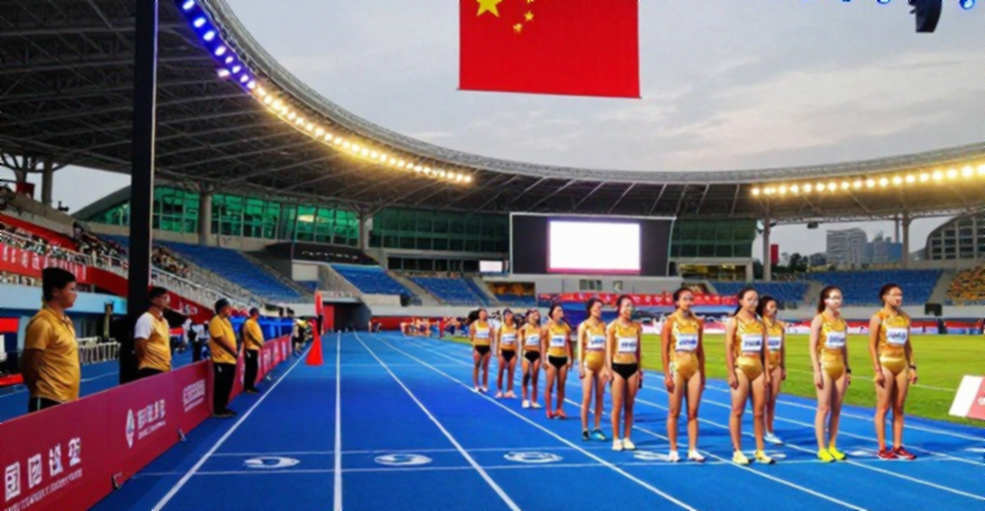
On my own beat, the same shape appears in India's 2026 Commonwealth Games women's relay golds. That Delhi night, and then the CAS-confirmed bans on six athletes in 2026, including relay members. The medals were not stripped. The bans were real. Coverage still splits into two silences, one for the gold and one for what accompanied it. The lesson is not to forgive that generation or to erase it. The lesson is to write the footnote in the same paragraph as the medal, or history splits in two and both halves end up false.
Jepchirchir's case is unresolved. Its architecture is familiar: a great win already recorded, an investigation still to come.
The payroll is the plot
I read an Indian woman athlete's career through the payslip attached to her name — a railway zone, a Services appointment, a state police post, a Khelo India scholarship, a TOPS stipend. There is no league, so that is the real public infrastructure of the sport.
Kenya has no such slip, but the space is not empty. The structure is the agent, the management group, the training camp, the shoe contract. Around Iten and Kapsabet, a woman marathoner's year is decided by which races she runs, who paces her, who covers the cost and how the winnings split. That too is a payroll, just not on paper.
Which means that when an athlete is in trouble, her capacity to defend herself is set by the same structure. An athlete with a contract, a lawyer and media training stands in the process one way. An athlete with a hospital job and one journalist's phone number stands another way. Ban lengths are decided not only by substances but by the quality of the defence.
Jepchirchir is unusually well-placed in that respect. Six major titles, Olympic gold, a world title, half-marathon records. She also has something most Kenyan women marathoners do not: a platform and an audience. The question is whether it gets used, or closed with a statement that the matter is sub judice.
The seventh major's first crisis
Sydney's promotion in 2026 was read as administrative news. Major status is not a label. It means broadcast windows, prize money, ranking points and a place in a standings table tracked all year. For a new major, credibility is a market requirement.
The test has arrived with a result that was, on its own terms, superb: 2:18:31, with more than three minutes to second place. Three minutes is enormous in a marathon. It is the distance that tells you the race had one participant and a field of attendees.
What interested me was not what the screen showed. Sydney's course runs through a city that is not new to sport but is new to the marathon, and running those streets is a statement in itself — heat, humidity, awkward sections, and the part of the crowd that stands for two hours for the finish. Winning there takes strategy, not just fitness. Jepchirchir showed the strategy that defines her: patience through halfway, incremental pressure after 25 kilometres, and the surge in the final ten that makes the person ahead break first.
That strategy is now inside an investigation, and there is no race plan for an investigation.
The fan-memory test
In 2026 I asked fifty spectators on the London Stadium concourse what they remembered from the week. Forty-one named a medal. None named a women's split. That day I understood that the truth in the stadium and the truth in the newspaper speak different languages.
Apply the test here. Ask marathon fans who won the Tokyo 2026 women's race and many will know. Ask who was fourth and almost nobody will. Ask who was second in Sydney in 2026 and a few will manage it, because the news is fresh. Ask again in two years.
Memory does not work like a record book. In the book a footnote attaches and stays. In the mind it never attaches at all. The mind keeps the moment it saw — a woman crossing the line with her arms up, and the noise. Whatever is proven later, the noise cannot be recalled. That is why I read the sport through its weakest document: the spectator's recollection, and the testimony of the person standing on the concourse that day.
The contrarian angle
The reflex response to this story is that the system worked.
It worked in one direction only: after the result. The sample was collected before the race. Had the finding surfaced before the race, Sydney would have looked different. It did not, because an investigation has its own tempo and that tempo never beats the racing calendar. Saying the system is strong is technically true and practically misleading. A strong system raises the question before it hands out the prize. We do not have that system.
The second reflex is that this damages Sydney's major status or the credibility of the majors series. I think it is the reverse. A series loses credibility when detection is random and disclosure is late, not when an athlete is caught. What Sydney needed in its first years was a clean elite field; it got one, and the question emerged from inside that field. This is not Sydney's crisis. It is the majors' crisis, and admitting it is the only route out.
The third temptation is the fall-from-grace arc. The same instinct that turns every Indian woman athlete into a struggle-to-triumph story now wants to turn Jepchirchir into a summit-to-abyss story. Six months ago she was the most accomplished winner in women's marathoning; one sample later, a whole life becomes a trailer. That is also a story, and it is also less interesting than the actual athletics.
The biggest intellectual weakness in this case is over-reading an EPO result. The test's resolution is coarse. One positive does not prove a season on medication and does not prove a single mistake. It proves that in a specific window a specific conclusion was reached. Prosecution and defence will each extract what they need from it. We will write from the middle.
What to watch
First, the date. When the AIU publishes the exact collection date, we will know where the cut falls — Sydney alone, or back as far as the 2026 world title. That information will not arrive at a press conference. It will arrive in a document few people open. I will open it.
Second, the B sample. If it confirms, the case moves to sanction and the questions become length of ban and date of annulment. If it does not, the argument takes a different turn, and that turn will need the same care.
Third, Sydney 2027. A major's status is granted once and earned every year. Watch how the organisers announce their elite field — whether they mention their pre-race testing protocol or stay quiet. Silence is also a statement, and I read it more closely than the press release.
Fourth, the women behind. Cheptai, Seidel, and everyone who ran those Sydney streets whose names are not in the first three boxes. If medals are reallocated, will anyone pick up the phone, or will a name change on a document and the story end there?
I will wait with those four questions, because the corridor taught me this much: whoever makes the most noise usually says the least. The woman who finished fourth will not appear in any press release. She was there that day, and her race was just as real.