
Heather Knight, Laura Harris star as Thunder make it two in two
सिडनी थंडर ने WBBL मुकाबले में ब्रिस्बेन हीट को छह विकेट से हराया। 179 के लक्ष्य का पीछा करते हुए थंडर ने 16.4 ओवर में चार विकेट पर 180 रन बनाकर 20 गेंदें शेष रहते जीत हासिल की — यह उनकी लगातार दूसरी जीत है। हीदर नाइट ने 27 गेंदों पर अर्धशतक पूरा करते हुए नाबाद 54 रन बनाए, फ़ोएबी लिचफ़ील्ड ने 19 गेंदों पर 41 रन (छह चौके, एक छक्का) ठोके और लौरा हैरिस ने 16 गेंदों पर नाबाद 35 रन बनाकर मैच समाप्त किया। हीट के लिए ग्रेस हैरिस (58) और जॉर्जिया रेडमेन (57) ने अर्धशतक बनाए, फिर भी टीम 5 विकेट पर 178 पर रुक गई — जिसे 'बेहतर स्कोर से कम' माना गया। गेंदबाज़ी में जॉर्जिया वोल (2/25) और बेसिंग्थवेट (2/34) सफल रहीं। मुख्य निष्कर्ष: थंडर की जीत तीन भूमिकाओं — पावरप्ले आक्रमण, मध्यक्रम स्थिरता और डेथ फ़िनिशिंग — का नतीजा थी, जबकि हीट की असली समस्या दो अर्धशतकों के बावजूद मध्यक्रम की कम गहराई है।
Sydney: Sydney Thunder beat Brisbane Heat by six wickets at Drummoyne Oval in the Women's Big Bash League, chasing down 179 with 20 balls to spare. It is Thunder's second win from two matches this season, and the manner of the chase is more significant than the margin.
The scorecard suggests an easy win. The numbers suggest something else: it was a win built on process. Chasing 179 required roughly 8.9 runs per over; Thunder batted at about 10.8 (180 in 16.4 overs). At no point did the asking rate get ahead of them. They stayed on par or better throughout, and Laura Harris applied the closing blow.
The platform: Powerplay
Thunder's chase was written in the first six overs. Phoebe Litchfield struck 41 from 19 balls with six fours and a six — 30 of her 41 runs, roughly 73 per cent, came in boundaries. That percentage tells you everything about her batting philosophy: she is not there to hold an end, she is there to clear the rope.
Litchfield was dismissed off the final ball of the Powerplay. That is a rule-bound inflection point rather than an accident — the fielding side gets its best field for that ball before the restriction lifts. But by then she had already done the job: the run-rate pressure of the Powerplay had been erased.
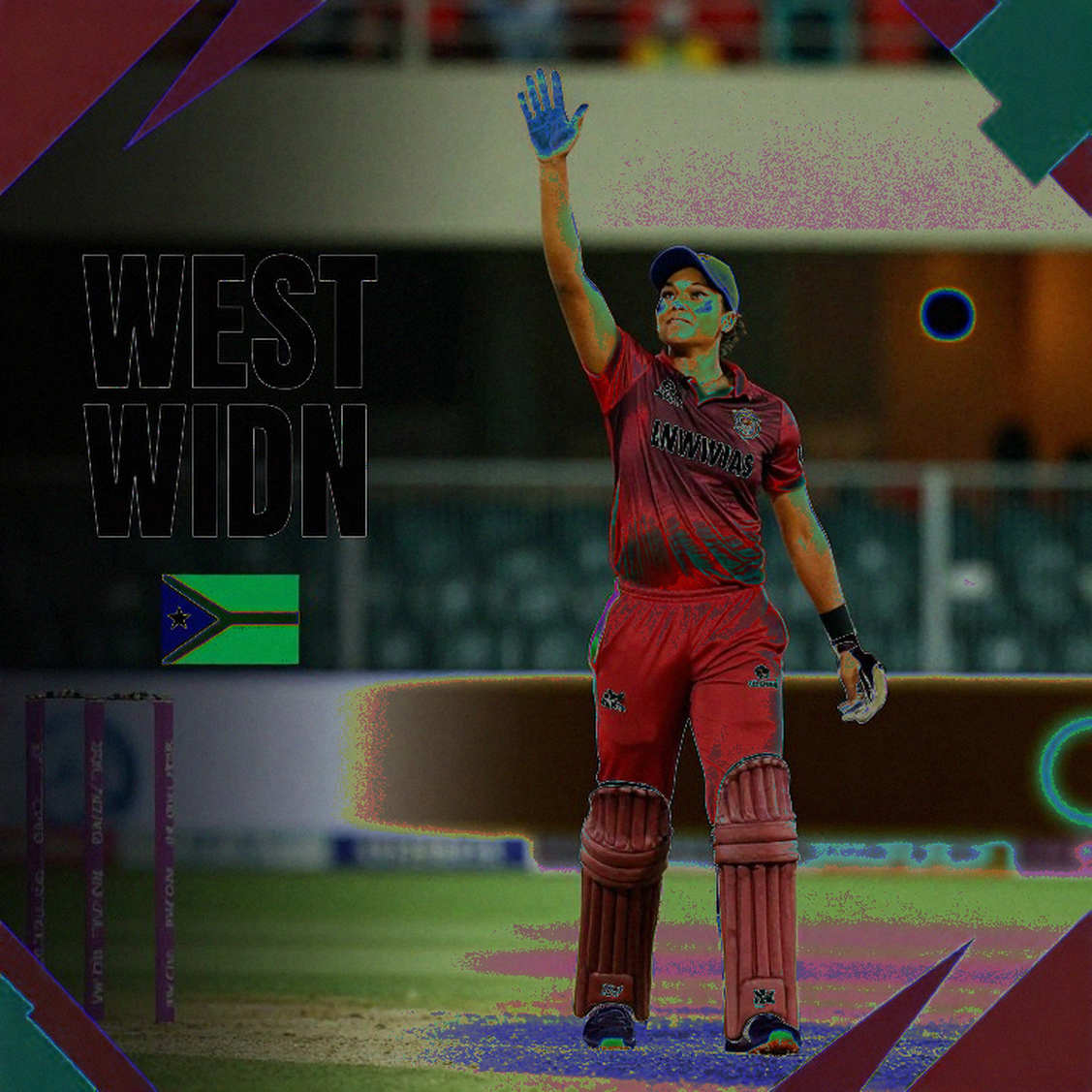
In T20 chases, the Powerplay's real value is not the runs but the escape from the run-rate trap. Bat at six or seven an over for the first six and the required rate climbs above ten, turning every subsequent ball into a risk. Litchfield's 215.8 strike rate took Thunder out of that trap and gave the rest of the order room to think.
The middle: Heather Knight's tempo control
The least discussed but most decisive passage came after Litchfield fell. Heather Knight did exactly what an experienced middle-order batter should: she kept the tempo but eliminated risk. She reached fifty in 27 balls — approximately 185 strike rate to the milestone, an elite figure for a T20 anchor, where 130-150 is the norm. She finished unbeaten on 54.
Learoyd contributed 37 and the pair put on 63. That stand bridged the gap between the Powerplay and the death overs — the most fragile phase of any chase, when the early aggression is spent and the finishing has not yet begun. Knight neither stalled the scoring nor lost a wicket in that window.
The important point is that this was role-based batting, not star batting. Knight's value here was not her strike rate but her calm. Chasing 179, a team needs someone to keep the game in flow through the middle. Knight did that. Her full-innings strike rate will have settled below her 185-to-fifty figure — because she batted through — but no wickets fell in that "slower" phase, and that was the difference.
The close: Laura Harris
If Knight held the chase together, Harris shut it down. Unbeaten 35 from 16 balls at roughly 218.8 is a specialist death hitter's innings. She was taking two boundaries an over. When a side is chasing, that is the most valuable skill on the field, because the bowler is committed to yorkers and slower balls and one big shot changes an entire over.
The headline will say "Knight and Harris" but this was a three-role performance. Litchfield front-loaded, Knight stabilised, Harris closed. Media star-narratives tend to flatten that division of labour. Nobody won this match alone.
Heat's innings: two fifties, still short
Brisbane Heat chose to bat, a logical call on Drummoyne's compact, batting-friendly surface. They made 178 for 5.
On paper, two fifties: Grace Harris 58 with a 32-ball half-century, Georgia Redmayne 57. A side with two 50-plus scores should have more than 178. The report calls the total "below-par", and that is the most revealing line in the piece.
Why did two fifties not become a par score? First, Heat's start looked like a deliberate anchor-first template, and it was slow. Second, Thunder restricted them in the final couple of overs. Third — and most importantly — Heat stalled through the middle after the dismissals of Grace Harris and Bhatia.
The pattern matters more than the numbers. Heat's problem was not a lack of starts but a lack of mid-innings acceleration. When your top two both pass fifty and the side still stops at 178, the output from positions three to five was thin. Orla Prendergast's brisk 28 was the exception, not the rule.
Thunder's bowling was shared: Georgia Voll 2-25, Bassingthwaighte 2-34. Voll's wicket — breaking the Harris-Bhatia stand — was the decisive one. It went under-reported because she failed with the bat, but her spell changed the shape of the match.
Technique: the two-phase anchor
There is a technical lesson here. Conventional wisdom says a T20 anchor is slow and therefore a burden. Knight's 54 not out challenges that. Her model: roughly 185 strike rate to the fifty, then game management. That two-phase approach is ideal for a chase, because the required rate is not steep at the start but the risk rises with every wicket. A batter who races to 40-50 and then stays unbeaten gives the side maximum value.
Litchfield's profile is the opposite: 73 per cent boundary dependency is high-variance, high-ceiling batting. It is excellent in a small chase and potentially streaky across a season. Thunder's advantage is that Knight's stability sits behind Litchfield's volatility.
A caveat on Harris: 35 from 16 does not mean 35 from 16 every week. That is a specialist death-hitter profile, highly situation- and matchup-dependent. Chasing suits her; setting has not yet been proven.
Grace Harris's fifty came off 32 balls at roughly 156 strike rate. Good, but not enough. Had it come off 25, Heat would have passed 190 and the match would have looked different. That is the gap between a good innings and a match-winning one.
Team structure
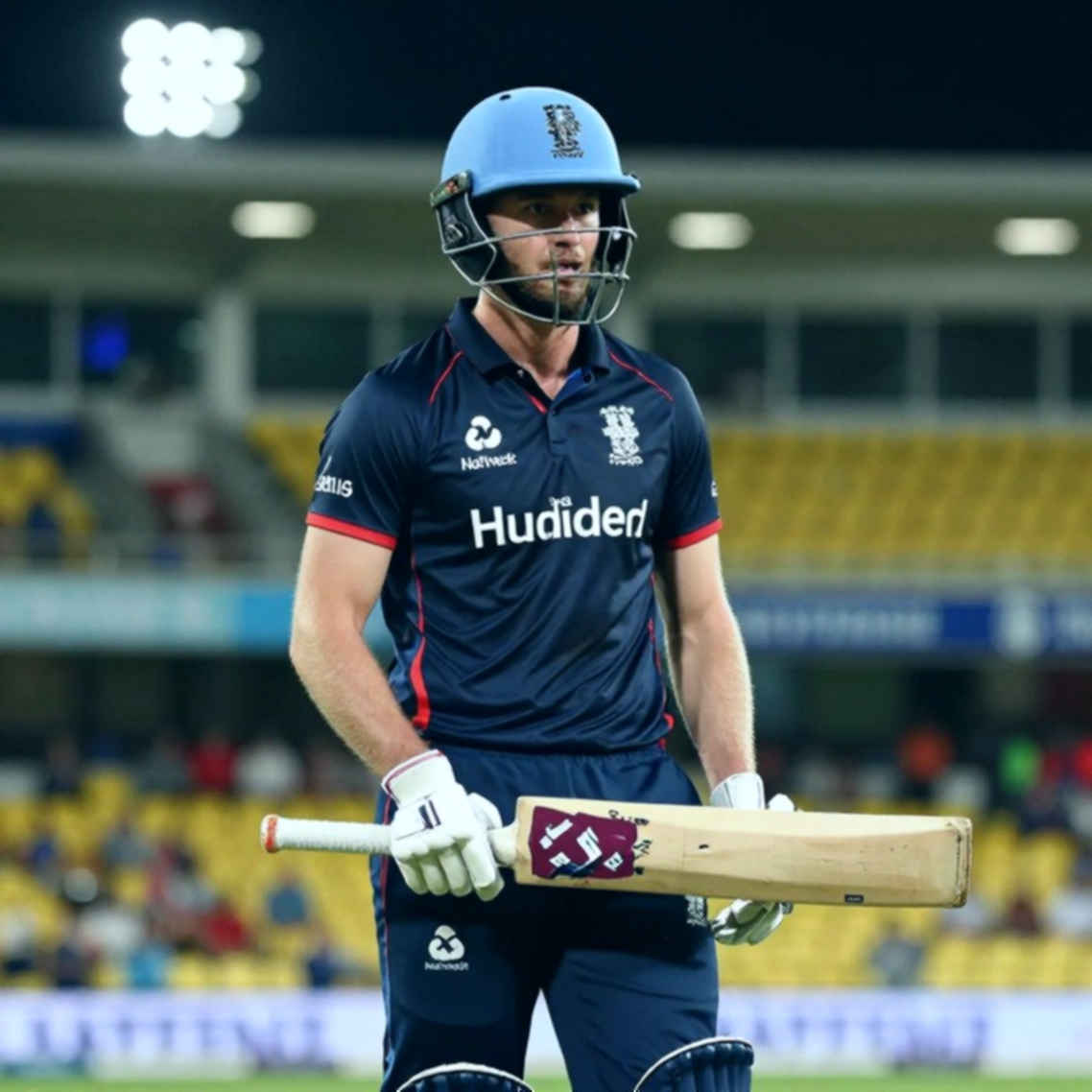
Thunder's batting is built in three gears: a Powerplay aggressor (Litchfield), a tempo controller (Knight) and a finisher (Harris), with Learoyd as the supporting link. The most common T20 failure is a team with only one gear. Thunder showed they can change gears. Getting home with 20 balls left is evidence that no phase jammed.
The overseas recruitment fits this design. Thunder have Knight (England) and de Klerk (South Africa); Heat have Prendergast (Ireland) and Bhatia (India). Four internationals from four countries in one fixture confirms the WBBL remains a magnet for global talent — and simultaneously a structural risk, because all four play under board-issued NOCs and any international window collision removes a star at short notice.
Heat's real problem is depth, not talent
Heat's dependence on the Grace Harris-Georgia Redmayne axis is structural. Both made fifties and the side still lost. That is the diagnostic red flag. When two top-order batters pass fifty and the total stalls at 178, the middle and lower order either lacked the capacity or the balls to contribute. Bhatia's dismissal was the turning point; Heat never regained their rhythm.
This is not a technical problem but a structural one. Heat need a reliable power-hitter at five or six who can strike at around 200 through the last five overs. Without that, two fifties will keep producing 180 — and 180 is no longer a safe WBBL score.
It is also possible that Heat's slow-start template is deliberate and is misfiring on good pitches. If so, it is a tactical problem, not a personnel one, and the fix is a change of approach rather than a change of lineup.
Thunder's risk sits off the field
Thunder's exposure is not on the field but upstream. Their chase structure leans heavily on Knight's stability and de Klerk's all-round value. One absence destabilises the middle order. Second, they have not yet developed a domestic middle-order anchor; Litchfield is young and boundary-dependent. Across a long season, on slower pitches, they will need someone who can bat time. That is a medium-term planning issue. Third, Sydney in early November carries rain risk; there is no reserve-day or DLS reference here, so the risk is low but not ignorable in planning.
Narrative versus evidence
The media language — "breezed past", "comfortable", "shut the door" — is mildly celebratory. Do the numbers support it? Largely, yes. Chasing 179 with 20 balls to spare, at 10.8 an over, staying ahead of the asking rate throughout, is objectively dominant. The comfortable-win narrative is not inflated.
But two qualifications are needed. One: this is a single-match sample. Two wins is not a season, and early-season momentum stories are typically superseded within a month as opponents analyse and adjust. Two: the framing centres the winners and drops the losers' problem. The under-discussed fact is that Heat's two fifties came in a losing cause. That says more about Heat's structure than about Thunder's star power.
There is also a star-framing risk: crediting Knight and Harris understates Litchfield's Powerplay platform and Voll's bowling. A balanced report says what happened — a three-part performance, not a one-hero drama.
Bigger picture: the WBBL ecosystem
No commercial conclusion can be drawn from this source. It is a pure match report with no attendance, broadcast or salary data; reading a comfortable win as a commercial signal would be overreach.
One structural observation is fair, however. A single match featuring players from England, South Africa, Ireland and India shows that women's franchise cricket is now a two-pole market: the WBBL as the incumbent, India's WPL as the higher-paying newcomer. A fixture stacked with overseas stars is exactly where talent-mobility tension surfaces. The blend of Australian youth (Litchfield) and overseas experience (Knight, de Klerk) remains the WBBL's most effective model — it gives young players high-level exposure and the league a global audience — but the price is that a franchise's win probability partly depends on international calendars it does not control.
Governance: no red flags
There is no reference to betting, fixing, controversy or umpiring dispute. Both brief scores are given, so the report is transparent and symmetrical. Rules were applied cleanly: the Powerplay restriction shaped the game (Litchfield out on its last ball), and both sides fielded their overseas contingent under quota rules. There is no DRS reference, consistent with WBBL seasons where review technology is limited — flagged as inference, not fact. Overall governance risk: low.
Three questions ahead
First, Thunder. Two wins is two points, but the real test comes on a slow pitch without Powerplay boundaries. On that day Litchfield's high-variance model will not carry the chase and Knight will have to do it alone. Does Thunder have a second route?
Second, Heat. Two fifties and a loss can be coincidence once; twice it is a pattern. Without a change at five or six, the same story repeats. 178 used to win WBBL matches. It no longer does.
Third, the league. Four internationals in one fixture is both the WBBL's strength and its dependency. How franchises handle international calendar collisions will be an increasingly loud question in coming seasons.
Conclusion
This was a process-backed win, not a toss or weather gift. Heat chose to bat, there was no DLS intervention, and Thunder still got home with 20 balls left. For a side chasing 179, that is objective dominance.
But the biggest lesson is not in the star names; it is in the division of roles. Litchfield removed the pressure, Knight provided the stability, Harris finished it, and Voll took the wicket that broke Heat's spine. Four contributions, one clean result.
On the other side, a team whose two batters made fifties and still lost. That is no longer unusual in the WBBL — it is evidence of the league's rising standard. Two good innings used to win matches; now they do not. That is a lesson for Heat, and a warning for Thunder: two wins does not mean everything is fine, because next time there will be no 54 not out from Knight and no 35 from 16 from Harris — and on that day they will need another route.
Brief scores
Brisbane Heat 178/5 (Grace Harris 58, Georgia Redmayne 57, Orla Prendergast 28; Georgia Voll 2-25, Bassingthwaighte 2-34)
Sydney Thunder 180/4 in 16.4 overs (Heather Knight 54, Phoebe Litchfield 41, Learoyd 37, Laura Harris 35)
Result: Sydney Thunder won by six wickets with 20 balls remaining — their second win in two matches.
(Note: several analytical conclusions — pitch character, bowling strategy and Heat's middle-order issue — are inferences drawn from the available match data, not stated facts in the source report.)