
होमAsian CricketSylhet Test: Hasan's two-in-two overshadowed by stretcher as Shadman injury tests Bangladesh's plans
Asian Cricket
Sylhet Test: Hasan's two-in-two overshadowed by stretcher as Shadman injury tests Bangladesh's plans
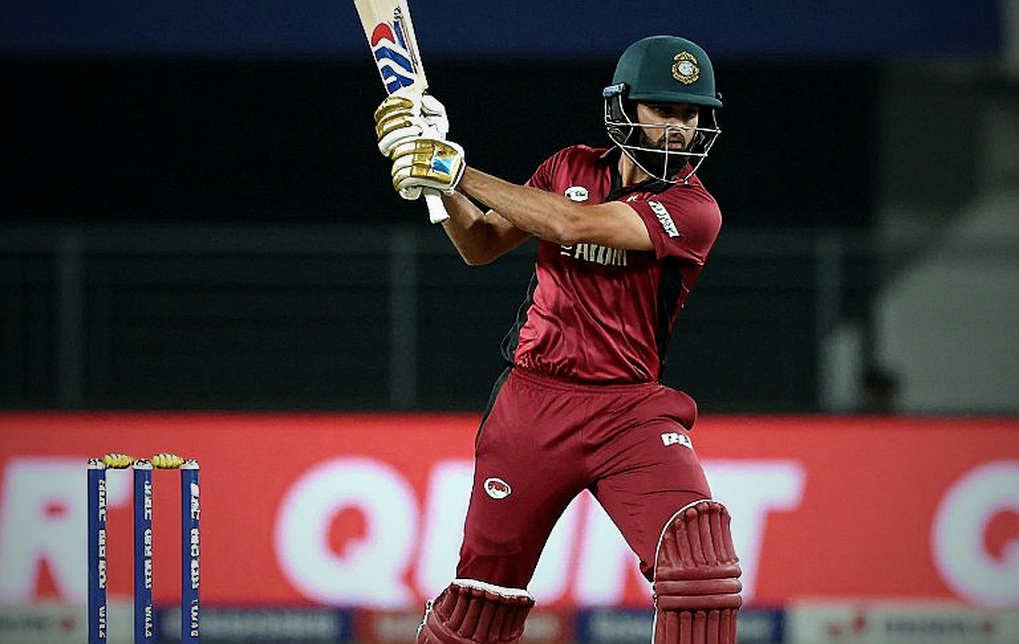
सिलहट टेस्ट के दूसरे दिन वेस्टइंडीज ने 78वें ओवर तक छह विकेट पर 291 रन बनाए थे। हसन महमूद ने लगातार दो गेंदों पर विकेट लिए, लेकिन हैट्रिक की तीसरी गेंद पर बिशप का एलबीडब्ल्यू फैसला डीआरएस में पलट गया। उसी ओवर में शादमान इस्लाम फील्डिंग करते हुए बाएं टखने में चोटिल होकर स्ट्रेचर पर बाहर गए; चोट का आधिकारिक निदान अभी नहीं आया है। बांग्लादेश की बल्लेबाजी कमजोर हुई, क्योंकि गैर-कंकशन चोट पर मैच में लाइक-फॉर-लाइक रिप्लेसमेंट नहीं मिलता और रिटायर्ड हर्ट का प्रावधान ही लागू होता है। दूसरी नई गेंद 80वें ओवर से उपलब्ध होनी थी, जो पारी का निर्णायक टर्निंग पॉइंट था। पहले दिन खराब रोशनी से खेल रुका था, जिससे ड्रॉ की संभावना और बढ़ी है। वेन्यू सुरक्षा और आउटफील्ड की समीक्षा इस घटना का अहम प्रशासनिक पहलू है।
Sylhet: The second morning of the Bangladesh versus West Indies Test produced two very different stories at the same time. On one side, Hasan Mahmud struck twice in two balls to give Bangladesh a grip on the innings. On the other, Shadman Islam was stretchered off after injuring his left ankle while fielding. According to the available match report, West Indies were 291 for 6 by the 78th over of their first innings, with Mehidy Hasan Miraz bowling and Aamir Jangoo at the crease. The session was therefore a first-innings consolidation phase, with Bangladesh's spin-led attack pressing against West Indies' middle and lower order.
The key point is that this was not merely a wicket-taking session. Bangladesh gained control with the ball, but at the same time their batting unit suffered a significant blow. Shadman Islam is a specialist Test opener, and his injury came before Bangladesh had begun their first innings. No confirmed diagnosis is available yet. The report does not state the scan result, the expected recovery time, or whether he will be able to bat in this match. What is clear is that treatment on the field did not resolve the problem and a stretcher was required.
Context matters here. Day 1 had closed early because of bad light, while Day 2 began on schedule. That means the match has already lost some overs. In Test cricket, lost time raises the draw floor. Bad light is different from rain: light stoppages usually leave the pitch dry and unchanged, but they reduce the available overs. Sylhet in winter also carries haze and fog risk, so further interruptions remain possible.
The bowling story begins with Hasan Mahmud. His two wickets in two balls exposed the West Indies tail at 291 for 6 and gave Bangladesh the chance to restrict the total below 330. That is precisely the moment a home side wants in a Test. But the hat-trick ball produced a notable sequence: Bishop was given out LBW, the batter reviewed, and the decision was overturned. Hasan's two-in-two remains intact, but the milestone was lost to the review process rather than to a poor delivery.
That distinction matters. The DRS did its job by correcting an on-field call. It was not a controversy, and it was not a failure by the bowler. The third wicket simply did not arrive because the technology showed the original decision could not stand.
The more serious issue is Shadman's injury. The report says that in the 78th over, off Mehidy Hasan Miraz, Jangoo flicked the ball towards the boundary. Shadman chased it, and while running and bending, his left ankle became stuck in the ground. That mechanism carries a higher risk than a routine rolled ankle. When the ankle catches in the turf and the body's weight goes over it, ligament damage or a high-ankle injury becomes a real concern. This is not a diagnosis, only a caution based on the mechanism.
Field treatment failed to get him back on his feet, and a stretcher was used. In professional Test cricket, stretchers are not routine for minor sprains. That combination is a severity signal. For a left-handed batter, the left ankle is load-bearing in the trigger movement and in the front-foot drive. Even a moderate ligament injury can affect batting before it affects fielding. That is why the question of whether he can bat is more important than whether he can field.
The injury also affects Bangladesh's structural planning. A specialist opener absorbs the new ball and protects the middle order. Bangladesh's top order has historically been fragile, so losing an incumbent opener forces a makeshift pairing and exposes the No.3 earlier than planned. The report itself treats the injury as a major setback.
There is also an important rule to clarify. Under ICC playing conditions, a non-concussion injury does not permit a like-for-like in-match replacement. Only a concussion replacement is allowed. For other injuries, the player can be replaced by a substitute fielder, and if he is unable to bat, the retired hurt provision applies. He may resume later only with the opposing captain's consent. If Shadman cannot bat at all, Bangladesh effectively bat with ten.
The presence of Mahfizul Islam Robin in the squad does not change that for this Test. He can field as a substitute and is the natural squad replacement for the next Test, but he cannot simply take Shadman's place in Bangladesh's first innings.
Mehidy Hasan Miraz's workload is another sub-plot. He was bowling the 78th over, deep into a long spell, and the injury occurred in his follow-through area. With Day 1 having lost overs to light, a frontline spinner's workload per available over rises. That is a live management issue, though not a criticism of the bowler.
The decisive tactical window is the second new ball, available after 80 overs. At the 78th over, Bangladesh were two overs away. If they had wrapped up the tail cheaply, they would have been in a strong first-innings position. If West Indies' lower order pushes the total towards 350, the pressure shifts onto Bangladesh's weakened batting line-up.
West Indies are better placed than the wickets column alone suggests. With 291 on the board and six down, and with Day 1 truncated, the draw floor is already rising. A total of 350 or more would put Bangladesh's depleted top order under genuine scoreboard pressure.
Both sides are mid-tier Test teams with different risk profiles. Bangladesh are home-dependent and depth-fragile. West Indies are vulnerable in Asia and reliant on their lower order. This match is a fair test of both weaknesses.
The least-discussed governance thread is venue safety. An ankle catching in the turf near the boundary is a surface-condition event. Host boards have a duty of care, and ICC venue-monitoring systems exist for this reason. A single incident is unlikely to trigger an immediate rating downgrade, but a BCB review of the outfield area is a realistic consequence. If a second similar incident occurs at the same venue, it should be treated as a systemic problem rather than bad luck.
There are no integrity red flags in the information set. Nothing touches fixing, odds, or anti-corruption monitoring. The DRS sequence was a normal correction of an on-field decision, and the bad-light protocol was applied as usual.
The biggest risk is not the wicket count. It is the batting-order shock. Bangladesh were on top with the ball and simultaneously lost the player whose job is to absorb the new ball in their own innings. The injury severity signal is strong enough to justify a conservative approach until imaging is available.
Match-compression risk is also elevated. Day 1 lost time, and any further light or haze interruption would push the match towards a draw. In a World Test Championship context, that raises the cost of lost overs for the home side.
The public narrative is currently fact-proportionate. The hat-trick near-miss will attract short-form attention, but it is a three-ball sample and should not be over-weighted. The stronger latent story is avoidable injury: the mechanism was a fielding incident caused by the turf, not a routine cricket injury. If the diagnosis is serious, the story will shift from sympathy to accountability.
Bangladesh's expectation baseline at home is often over-optimistic. The market prices home Tests as wins, but the underlying squad is depth-thin and has now become thinner. That gap is the key insight.
The signals to track are clear: the medical report on Shadman's left ankle; whether he bats at all; the outcome of the second new ball from over 80; the squad replacement announcement for the next Test; any further light stoppages; and whether the BCB comments on the outfield. Those signals will shape the rest of the match and the series.
Overall, the session was mixed for Bangladesh. They created an opportunity with the ball, but the injury weakened their batting plan. Hasan's two-in-two is a positive, while Shadman's injury is a major concern. The next big update will be the medical report. Until then, conclusions should remain cautious. This report is for sports information only and does not constitute betting advice. Career statistics were not supplied in the source material and should not be treated as verified figures.
संबंधित खिलाड़ी