
Two Double Centuries in One Day: Bangladesh's Domestic Run Flood, the Truth About the Pitches, and the Cold Politics of Selection
**मुख्य उत्तर:** राष्ट्रीय क्रिकेट लीग (NCL) के एक ही दिन तीन मैदानों पर तीन बल्लेबाज़ों ने बड़े स्कोर बनाए — मोहम्मद नईम 282 (369 गेंद), महफिज़ुल इस्लाम 217* (351 गेंद, 465/7 पर घोषित) और ज़ाकिर हसन 112*। ये फ़र्स्ट-क्लास आँकड़े हैं; इन्हें टी20, वनडे या टेस्ट तैयारी का सबूत न मानें। **मुख्य तथ्य:** - मोहम्मद नईम ने 369 गेंदों पर 282 रन बनाए (स्ट्राइक रेट 76.4), जिसमें 21 चौके और 7 छक्के शामिल रहे। - महफिज़ुल इस्लाम ने 351 गेंदों पर 217* रन बनाए; मयमनसिंह डिविज़न ने 465/7 पर पारी घोषित की। - नईम का पिछला फ़र्स्ट-क्लास सर्वश्रेष्ठ 180 रन था (46 मैच); 282 उनके करियर-बेस्ट से 56.7% ऊपर है। - तीनों मुक़ाबले राजशाही डिविज़नल स्टेडियम, बोगुड़ा और कॉक्स बाज़ार में खेले गए; तीनों में पहले बल्लेबाज़ी करने वाली टीम ने बढ़त ली। - बांग्लादेश की 15 सदस्यीय टेस्ट टीम घोषित हो चुकी है, जिसमें ओपनर तनज़ीद हसन और शादमान इस्लाम शामिल हैं; मुख्य गेंदबाज़ राष्ट्रीय शिविर में हैं। **स्रोत:** NCL मैच रिपोर्ट आधारित स्टेज-1 डेटा। बायलाइन, प्रकाशन तिथि और आधिकारिक स्कोरकार्ड का हवाला मूल स्रोत में दर्ज नहीं; मैच की तारीख़ अपुष्ट है और BCB/ESPNcricinfo स्कोरकार्ड से सत्यापन लंबित है। सभी आँकड़े 'डेटा सत्यापन लंबित' के रूप में पढ़ें। **संबंधित प्रश्न-उत्तर:** प्रश्न: क्या 282 रन टेस्ट टीम में जगह पक्की करते हैं? उत्तर: नहीं — चयन घोषित 15 सदस्यीय टेस्ट स्क्वाड और ए-टूर सूचियों से तय होता है, जहाँ ओपनर के रूप में तनज़ीद हसन और शादमान इस्लाम पहले से नामित हैं। प्रश्न: महफिज़ुल इस्लाम 300 तक क्यों नहीं पहुँचे? उत्तर: मयमनसिंह ने 465/7 पर पारी घोषित की, यह टीम-लक्ष्य का निर्णय था, बल्लेबाज़ के आउट होने का परिणाम नहीं। प्रश्न: NCL में पहली पारी की बढ़त के अंक मिलते हैं? उत्तर: सामान्य फ़र्स्ट-क्लास ढाँचे में पहली पारी की बढ़त अंक दिलाती है, जिससे बड़ी पारी और सपाट पिचों की प्रवृत्ति बनती है — यह अनुमान है, पुष्टि के लिए NCL की आधिकारिक नियमावली देखें।
At half past four in the evening I had three scorecards open on my laptop and a batter standing in each of them. At the Rajshahi Divisional Stadium, Mohammad Naeem had already been dismissed for 282. In Bogura, Mahfizul Islam was unbeaten on 217 — unbeaten not because no bowler could remove him, but because Mymensingh Division declared at 465 for 7. In Cox's Bazar, Zakir Hasan was batting on 112. One day, three grounds, three unrelated matches, three separate innings — and one identical outcome: the batters were winning.
The figure that stays with me is not 282. It is 369. Naeem faced 369 balls; Mahfizul faced 351. In T20 those are four or five innings stitched together. Here they are single innings. In first-class cricket, facing more than 350 balls is not unusual — in Asian conditions a four-to-five-hour innings is simply the shape of the format. The question is not that this many runs were made. The question is which window we are using to look at them.
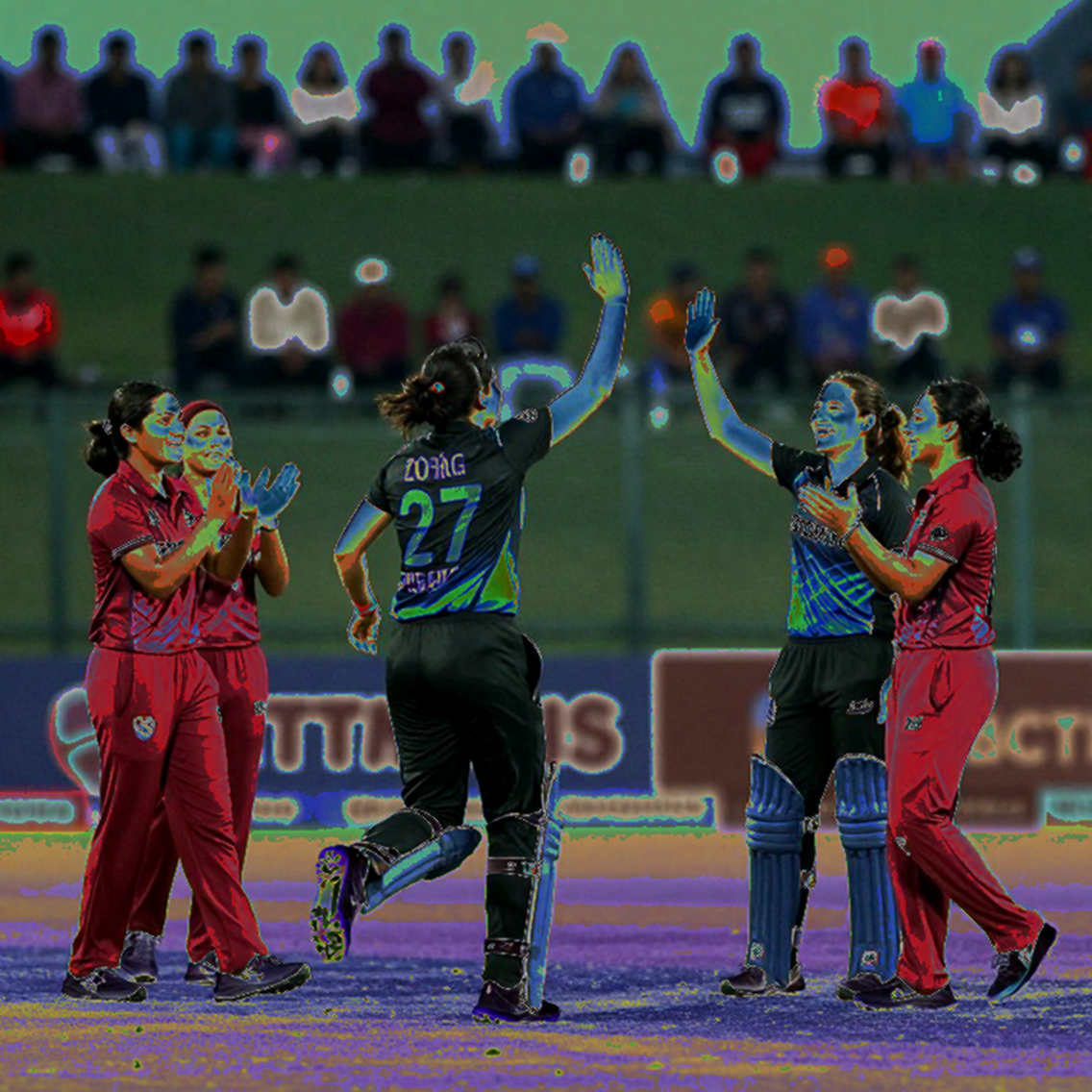
I keep returning to the hour when the stadium is empty and the server still hums. That hour sat inside the Rajshahi innings. Three hundred and eighty-odd runs went onto the board in front of a crowd you could count. Cricket's real testimony is usually filed in that empty hour — when the drums are silent, you can hear exactly what the bat was up against.
A note on sourcing, up front. The public record of this day carries no byline, no publication date, no citation of an official scorecard. All three scores are single-source, match-report-style figures. So I am reading them as a logbook rather than a verdict, and I am treating the date and the scorecard detail as pending a cross-check against the BCB and ESPNcricinfo official records. That fact is part of the story, not a footnote to it.
The National Cricket League is Bangladesh's domestic first-class competition, a multi-day tournament contested by divisional teams. It is where a national opener is made and where the fewest cameras are pointed. This round ran three matches simultaneously — Rajshahi Divisional Stadium, Bogura, Cox's Bazar — and in all three the side batting first took control. Dhaka Division built around Naeem, Mymensingh declared at 465 for 7, and Sylhet Division were anchored by Zakir Hasan's unbeaten 112.
The simplest and least romantic explanation for three large scores at three separate venues on the same day is that the pitches favoured batting and the bowling depth was thin. Three unrelated matches producing 282, 217 not out and 112 not out in a single day is far more easily explained as a systemic signal than as three simultaneous individual breakthroughs. When the same thing happens three times independently, it is usually weather rather than miracle.
The absent bowlers are the biggest unspoken layer of the whole day. Bangladesh's fifteen-man Test squad has been named, with Tanzid Hasan and Shadman Islam listed as the chosen openers. The nature of a domestic championship is that front-line seamers and spinners sitting in a national camp are simply not available on the domestic circuit that week. So while Naeem was making 282, the attack in front of him was not the attack he will meet in a Test. That is not an insult to his innings — it is the single most important piece of information needed to price it.
One structural inference belongs here, and I will label it as an inference. First-class league structures commonly award points for a first-innings lead. Where a first-innings lead carries points, teams invest in a large first innings, and a large first innings demands a pitch that survives three days. The declaration at Bogura is direct evidence of that logic: the innings ended because of a team objective, not because of a bowler's quality. I am not confirming the NCL points system from here; this is a reading that fits the day's numbers.
Now look inside Naeem's innings. 282 runs from 369 balls, a strike rate of 76.4. Twenty-one fours and seven sixes — 126 runs in boundaries, 44.7 per cent of his total. The remaining 156 runs came off 341 balls, a non-boundary strike rate of roughly 45.7. For an opener that is unremarkable; unremarkable is the actual news. Large scores are not constructed out of boundaries. They are constructed out of the deliveries nobody applauds.
Mahfizul's numbers become interesting precisely in that comparison. 217 runs from 351 balls, a strike rate of 61.8. Twenty fours and two sixes — 92 runs in boundaries, 42.4 per cent of the total. The other 125 runs came off 329 balls, a non-boundary strike rate of roughly 38.0. Their boundary shares are almost identical, but Naeem was scoring about seven runs per hundred balls faster in the spaces between the boundaries — which is the difference between a batter rotating strike and a batter simply occupying the crease. Both made a double hundred; the two innings were built differently.
The day-by-day progression confirms it. Naeem moved from 171 not out to 282, adding 111. Mahfizul moved from 156 not out to 217, adding 61. The first day was accumulation; the second belonged to Naeem as acceleration and to Mahfizul as consolidation. At 22, Mahfizul is pre-peak, and risk-aversion at that age is entirely legible.
But the most important number in the whole story gets the least space in the source: Naeem's previous first-class best was 180, across a career of 46 matches. 282 is 102 runs beyond that — 56.7 per cent above his own ceiling. A batter surpassing his own career best by more than half is an outlier, not a trend. It is what happens when a casual player wins everything in one ranked lobby for a night: the night is real, but it does not set the season average.
The manner of Naeem's dismissal tells us more than the runs did. He was out attempting to hit the spinner Rahim Ahmed down the ground — coming out of the crease, going aerial, caught at cover. At 282, with a declaration visible on the horizon, taking that risk was not rational. Calling it a character flaw would be too much; it is one incident, one observation, a low-confidence signal. But it is the only public technical data point we have on his method against spin, and it points where big scores train us not to look.
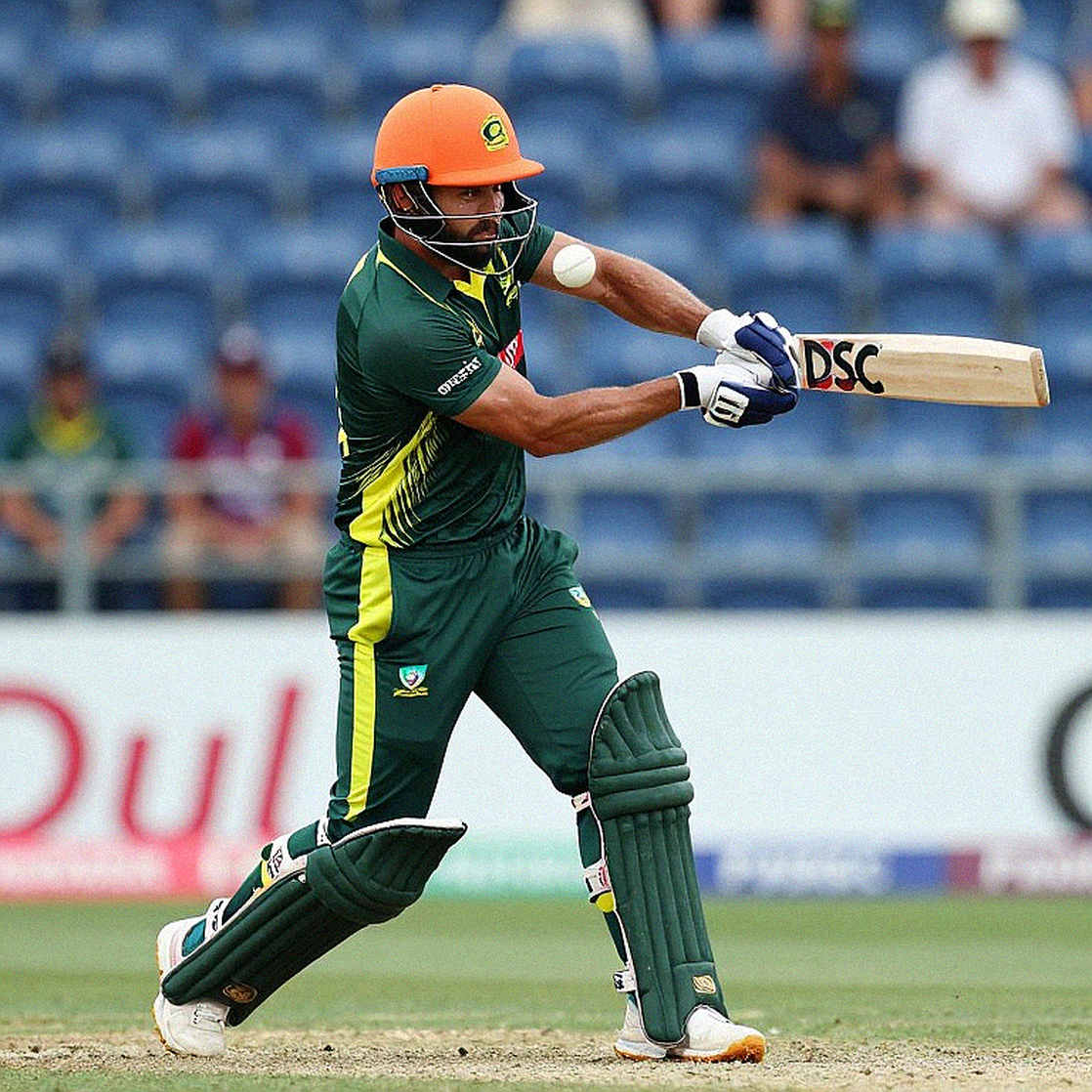
Mahfizul carries a second data point, and it is inconvenient: four runs off eight balls for BCB XI in the warm-up against West Indies. An eight-ball sample is statistically meaningless and judging a batter on it would be absurd. Directionally, though, it is the only available look at him against international-quality bowling, and it does not argue in favour of the 217 not out.
Now the strongest version of the conventional view. Bangladesh's domestic circuit has produced two openers with double hundreds on the same day; therefore the system is paying out, the bench is deeper than the XI, and the selectors now have a genuine headache about whom to pick and whom to hold. That reading is attractive and contains some truth: making runs in domestic cricket remains the cleanest route to a national call-up, and a batter who can last 350 balls has at least demonstrated temperament.
Two things change when reporting touches that picture. First, the day measured pitch conditions and an absentee list more than it measured batting talent. Second, the selection story existed before the scores did. The source report's own framing is the proof — these batters are described as potential alternative openers. The journalist was already on the selection debate, and the scorecard became that debate's evidence rather than its cause.
That is where the easiest error hides. Treating first-class numbers as evidence of T20 or ODI readiness is a category error, and so is treating them as evidence of Test readiness. Strike rates of 76.4 and 61.8 tell you these innings were built on patience, not on a T20 mentality. Reading them as a power-hitting certificate commits the same mistake as judging a Test innings by its run rate.
One more layer belongs here, and it concerns the economy of domestic cricket — the same economy that, in a transfer window, decides a player's future through release-clause structures and wage bills. In Bangladesh that economy is written into the fifteen Test names, the A-tour squads and the central contracts. The real value of Naeem's 282 and Mahfizul's 217 not out will be set in those three documents, not in the scorecard. And while the front-line bowlers are in national camp, domestic runs will keep trading at a discount.
Look across the border and the pattern sharpens. The Ranji Trophy produces scores like these every season, and every season the coverage is thinner. Domestic cricket's problem is not a shortage of talent but a system of attention that underfunds it — a match that goes uncovered loses its 282 by the following month. Bangladesh's NCL sits in the same window.
So what should we watch in the next round? Three things, and all three will explain this day better than the scores did. One: where do scores stop on these same pitches once the Test squad's bowlers return from camp to domestic grounds. Two: do Naeem and Mahfizul appear in the next A-tour list or above it, or does this day become fuel for another round of selection argument and nothing more. Three: when someone mentions these two innings next month, do they remember the 282, or that they remember who was bowling at the three grounds that day.
The post never ran, but the question stayed in the comments. The question is mine as well: if these same two batters return next round and make forty on the same pitch, will the same papers write the same story in reverse — or will the day two openers made double hundreds have hardened into history too quickly to be reversed? Every caster is a bard with a headset, trying to make numbers feel like weather. The weather today was clear, which is exactly why the next clouds matter more.