
Eden Park's Angles and India's Catching: The Truth Behind 77.5% Efficiency and the Challenge of a Single Training Session
सवाल: न्यूज़ीलैंड वनडे सीरीज़ से पहले भारत की क्षेत्ररक्षण तैयारी कैसी है? जवाब: टाइम्स ऑफ इंडिया की रिपोर्ट के मुताबिक़ भारत ने ऑकलैंड के ईडन पार्क में पहले वनडे से पहले सिर्फ़ एक अभ्यास सत्र किया, जिसमें 'कटिंग द एंगल्स' ड्रिल पर काम हुआ — यानी फील्डर को घुमावदार रास्ते की बजाय सीधी रेखा में गेंद के इंटरसेप्शन बिंदु तक दौड़ना सिखाया गया। ईडन पार्क की छोटी सीधी बाउंड्री, असमान कोण, हवा, ठंड और अलग फ़्लडलाइट इस ड्रिल की वजह हैं। सबसे अहम आंकड़ा: पिछले 18 वनडे में भारत की कैचिंग एफिशिएंसी 77.5% रही, 27 कैच छूटे। यह शीर्ष स्तर के 80%+ बेंचमार्क से नीचे है। व्यक्तिगत रूप से कुलदीप यादव (11 मैच, 5 ड्रॉप) और केएल राहुल (16 मैच, 4 ड्रॉप) सबसे बड़ी चिंता हैं, जबकि रोहित शर्मा (18 मैच, 15 कैच, 2 ड्रॉप) सबसे भरोसेमंद कैचर हैं। पूर्व फील्डिंग कोच आर. श्रीधर का कहना है कि हर वेन्यू की चुनौती अलग है और अभ्यास की मात्रा हर खिलाड़ी के लिए अलग होती है। नोट: 77.5% का आंकड़ा किसी नामित डेटा एजेंसी से नहीं जोड़ा गया है, इसलिए इसे 'सत्यापन लंबित' माना जाना चाहिए, और इसे टी20/टेस्ट के कैचिंग डेटा के साथ नहीं मिलाया जाना चाहिए। ट्रैक करने योग्य संकेतक: पहले दो वनडे में कैच/अवसर दर, कुलदीप की फील्डिंग पोज़िशन, और ईडन पार्क की शाम की रोशनी में ऊंचे कैच।
The Indian cricket team is gearing up for a five-match ODI series in New Zealand, and the first stop is Eden Park in Auckland — a venue whose geometry is fundamentally different from a standard cricket oval. According to a preparation report in the Times of India, the Indian side devoted the bulk of its practice session to fielding, and specifically to a drill known as 'cutting the angles'. This is not an ordinary catching exercise; it is a direct response to the problem created by short, converted rugby grounds such as Eden Park: the route to the ball is not straight, it is curved.
The most important thing about the report is that it is not a match report but a training-session report. There is no score, no pitch report, no bowling or batting metric in it. But there is one figure that becomes the centre of the entire debate — India's catching efficiency of 77.5 per cent, with 27 catches dropped across the last 18 ODIs. That single number is what justifies the preparation, and it also tells us how legitimate the concern is and how much is narrative.
An unusual ground, an unusual challenge
Eden Park's defining feature is its boundaries. The straight boundary is short, the outfield angles are irregular, and the stands are constructed in a way that creates 'pockets' in the deeper areas where the ball goes and batters comfortably run two. The report states plainly that the ground has 'different dimensions', that ground fielding is tricky, and that the deeper areas offer more opportunity for twos. For India this is not a question of aesthetics — it directly translates into runs saved or conceded.
It is important to understand that the fielding challenge at Eden Park divides into two parts. First, stopping the ball on the ground and running to it — where awkward angles and uneven bounce lengthen a fielder's route. Second, taking high catches in the air — where floodlights, wind direction and cold weather all act together. The report explicitly flags wind, cold, the match start time and 'different floodlights' as the changing variables. Auckland's weather is traditionally volatile, and taking high catches under artificial light in the evening has always been difficult work.
What exactly is 'cutting the angles'?
Former India fielding coach R Sridhar has clarified what the drill means. In a normal situation a fielder runs toward the ball along a curved path — that is the body's natural tendency. But a curved path means more distance, and more distance means more time. In 'cutting the angles', the fielder is taught to run in a straight line toward the point where the ball will arrive in his path — not where the ball currently is. It looks like a small technical change, but on a small ground where every second equals a run, it can be decisive.
Sridhar also said that every ground has its own challenge and there is no one-size-fits-all solution for every venue. He emphasised the venue-by-venue difference — wind is a different sort of problem in Wellington, dimensions in Auckland, and conditions at Bay Oval in Mount Maunganui are comparatively normal. He also noted that the right volume of practice is different for each player — some want more reps, some settle with fewer. The 'no one-size-fits-all' point is technically correct, but it also concedes that preparation is individual, not collective.
77.5% — what the numbers say
Now the part that is the spine of the whole report. Twenty-seven catches dropped in 18 ODIs, a catching efficiency of 77.5 per cent. At international level, the benchmark for leading ODI sides is generally taken as around 80 per cent or above. So 77.5 per cent is not poor, but it is below 'excellent'. It is a mid-tier figure — not bad enough to panic about, not good enough to be reassured by.
One important methodological point: the report keeps this figure within the ODI frame and does not mix it with T20 or Test catching data. That is the right approach, because the number and type of catching opportunities differ across formats. In ODIs the ball is in play for 50 overs, so catching opportunities are the most numerous — and this is precisely why the 77.5 per cent figure, on a sample of 18 matches, can be treated as reasonably robust.
But there is also a transparency gap: no data agency is named behind the figure. It should be placed in the 'verification pending' category — directionally useful, but not to be treated as final truth.
Kuldeep Yadav: the sharpest question
Among individual numbers, the most striking name is Kuldeep Yadav — five catches dropped in 11 matches. That is roughly 0.45 drops per match. For a spinner who generally fields in the deep or at third man/point, this rate is unusually high. A spinner bowls the most overs in a match anyway, meaning he spends the most time on the field — and if his catching is weak, that weakness repeats across the entire innings.
One point needs to be made clearly: the report does not say which position Kuldeep fields in. But if he is stationed in the deep, Eden Park's short straight boundary and irregular angles will make his task harder still. High catches that are simple on a normal ground become complicated there because of wind and light. Across a five-match series, if Kuldeep plays nearly every game, his drops will compound — a catch or two can mean the difference of a match or two.
KL Rahul: the different cost of a wicketkeeper's drop
KL Rahul's four drops in 16 matches works out to 0.25 per match. On the surface that looks lower than Kuldeep's, but for a wicketkeeper it is a matter of concern. The reason is straightforward — wicketkeeping catches are generally 'regulation' chances, the kind that must be taken at professional level. A dropped catch in the outfield is sometimes a genuinely difficult opportunity and can be forgiven; a dropped catch in keeping is always a major question, because its opportunity cost is the highest. A dropped catch does not just cost a wicket; it changes the bowler's confidence and the captain's field set-up.
Rohit Sharma: the one reliable pair of hands
There is one clearly bright part of this picture — Rohit Sharma. Fifteen catches in 18 matches, only two drops. That is the team's most reliable catching record and probably reflects his slip or close-catching role. Where the team average is 77.5 per cent, Rohit's individual record sits well above it.
But there is a hidden problem here too. The team's 77.5 per cent is an average, and an average always conceals distribution. If a superb catcher like Rohit is pulling the average up, it also means the rest of the side is performing below that 77.5 per cent — particularly in deep fielding, where fielders like Kuldeep and Rahul are stationed. In other words, the real area of concern is 'deep fielding', not close-in catching.
A single session — how much is enough?
Another important fact in the report is that the team got only one practice session before the first ODI. The report puts the duration of the drill at roughly 30 minutes. From a cricket-technique standpoint the reality is this: one 30-minute drill cannot produce a measurable improvement in catching efficiency before the first match. Skill acquisition takes time; it needs repetition.
So what is the drill for? Its real benefit is not technical but mental. Familiarising with a new ground's angles, understanding how the ball will behave, and above all — establishing coordination in calling between fielders. The emphasis in the report on 'calling loudly' is a signal that there may have been past confusion or collisions between fielders. When two fielders run for the same ball and nobody speaks, the catch is dropped — even if both fielders are individually capable. The drill targets collective coordination more than individual skill.
Wind, light and cold
The team is trying to offset the lack of preparation with accumulated experience. The report cites the experience of Rohit Sharma, Virat Kohli and Shubman Gill — the assumption being that players who have played in New Zealand before will adapt faster. That argument is fair, but it has a limit: experience tells you which way the wind will blow, but the muscle memory of taking a high catch in that wind does not come from experience.
The venues will also keep changing — Auckland, then Wellington, then Hamilton, then Mount Maunganui. Different wind behaviour everywhere, different outfield speeds everywhere. Sridhar himself has said that every ground's challenge is different. That means the drill that works in Auckland will not work in the same form in Wellington. The team will have to adapt continuously through the series; the initial preparation alone will not carry them.
The full risk map
Assess the risk of this entire preparation and the picture becomes clear. The biggest sporting risk is that catching efficiency sits at 77.5 per cent — not dangerous, but weak. The second risk is the shortage of preparation — a single session. The third is individual risk — the drop rates of Kuldeep and Rahul. The fourth is environmental — wind, cold and floodlight variability.
None of these risks is existential. But ODI cricket has a particular characteristic — in a close match, two dropped catches can flip the result. Across a five-match series, if two matches slip away for this reason, the whole balance of the series is disturbed. That is why the overall risk rating is 'medium', not 'low'.
The 'watertight' claim — how true is it?
The report carries a remark that Indian fielding 'no longer has the watertight look it once did'. That is an opinion, not data. And the report itself also says that India's fielding in ODIs is generally better than in T20Is and Tests. In other words, if ODIs are India's best fielding format and the figure there is still 77.5 per cent, the real story is that there is room for improvement — not that there is a crisis.
Compared to that remark, the hard 77.5 per cent figure is more reliable. The media narrative should be discounted in proportion to how much it deserves — it is a warning, not a verdict.
What to watch next
India's caught/opportunity rate in the first two ODIs will be the most important indicator. If two or more catches go down in the opening match, the 77.5 per cent concern will be validated. If the team catches cleanly, the entire narrative will cool quickly — because this is a short-cycle story that is settled on the field almost immediately.
The second indicator will be Kuldeep's fielding position. If he is placed in a 'lower-risk' spot such as close-in or fine leg rather than the deep, it means the team management has accepted the risk and adopted a strategy of hiding it.
The third indicator will be high catches under the evening lights at Eden Park. If the ball is seen slipping through hands there, it will not be a coincidence — it will be confirmation of exactly what a single session was used to prepare for.
Conclusion
This is not a crisis story. It is the story of a team taking the field with its strongest batting and bowling, alongside a small, measurable weakness. A 77.5 per cent catching efficiency is not an insult — it is a clear signal that there is room for improvement and that the team has taken the first step in that direction. The 'cutting the angles' drill will neither work miracles nor is it useless; it is the most sensible use of the limited time that was available.
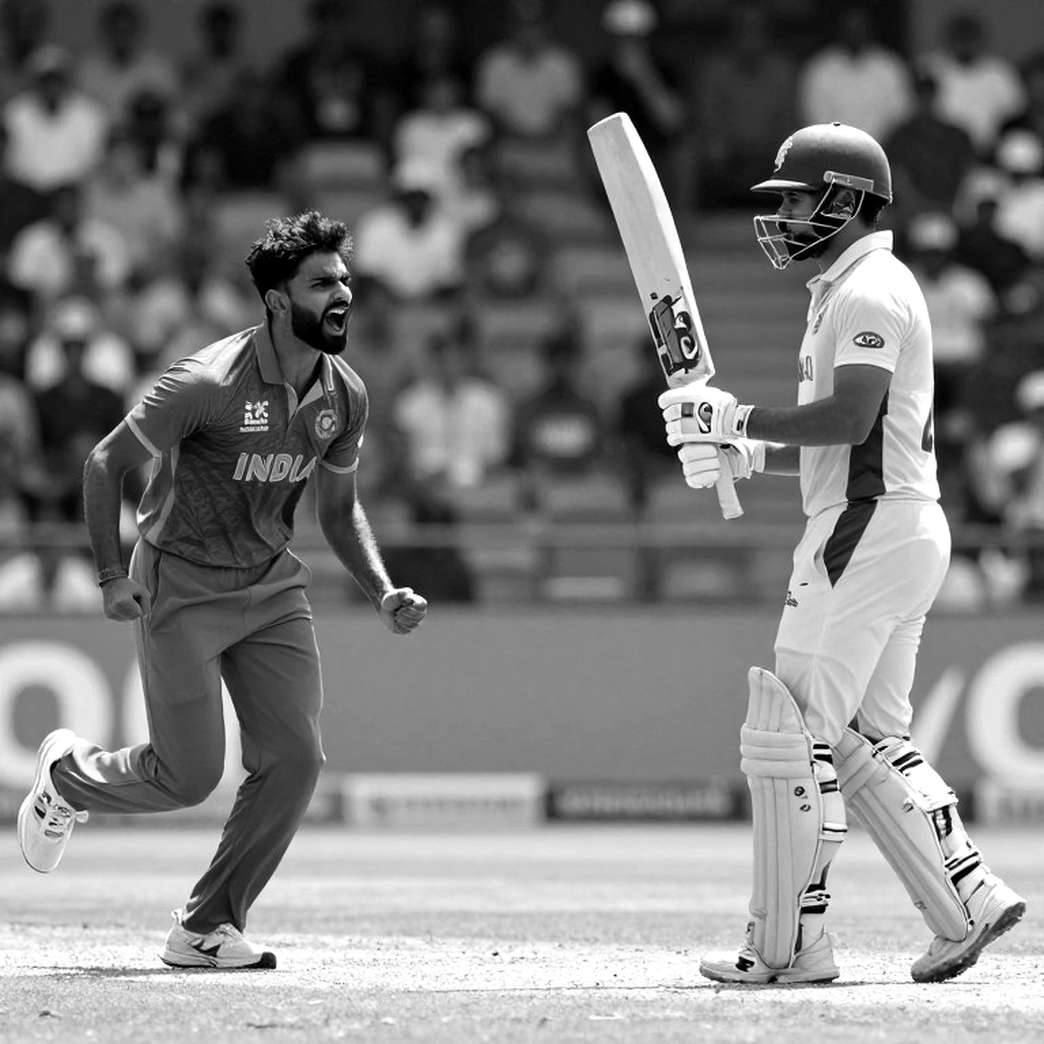
The real test will not come in the drill but on that evening at Eden Park when the ball goes over Kuldeep's head and the wind carries it away from him. In that one moment, the 77.5 per cent figure will either improve or deepen. Everything else comes later.