
How much did Lakshya Sen win in prize money after Hylo Open 2026 triumph?
लक्ष्य सेन ने हाईलो ओपन 2026 का पुरुष एकल खिताब 21-17, 21-10 (39 मिनट) से जीता। प्राइज़ मनी: हालिया संस्करणों के लगभग 2,10,000 डॉलर के कुल पर्स और BWF की 7% विजेता-हिस्सेदारी के आधार पर अनुमानित 14,700 डॉलर (करीब 12.5-13 लाख रुपये) — आधिकारिक पुष्टि BWF प्रोस्पेक्टस से बाकी। असली रिटर्न रैंकिंग पॉइंट्स (करीब 7,000-8,000) और स्पॉन्सरशिप-मूल्य में है, प्राइज़ चेक में नहीं।
Saarbrücken. Lakshya Sen has won the Hylo Open 2026 men's singles title — 21-17, 21-10 in 39 minutes. That scoreline is a control-win fingerprint, not a power-win fingerprint. But the question being asked most often is not about the court; it is about the tournament's prize-money table. What did this title actually earn him?
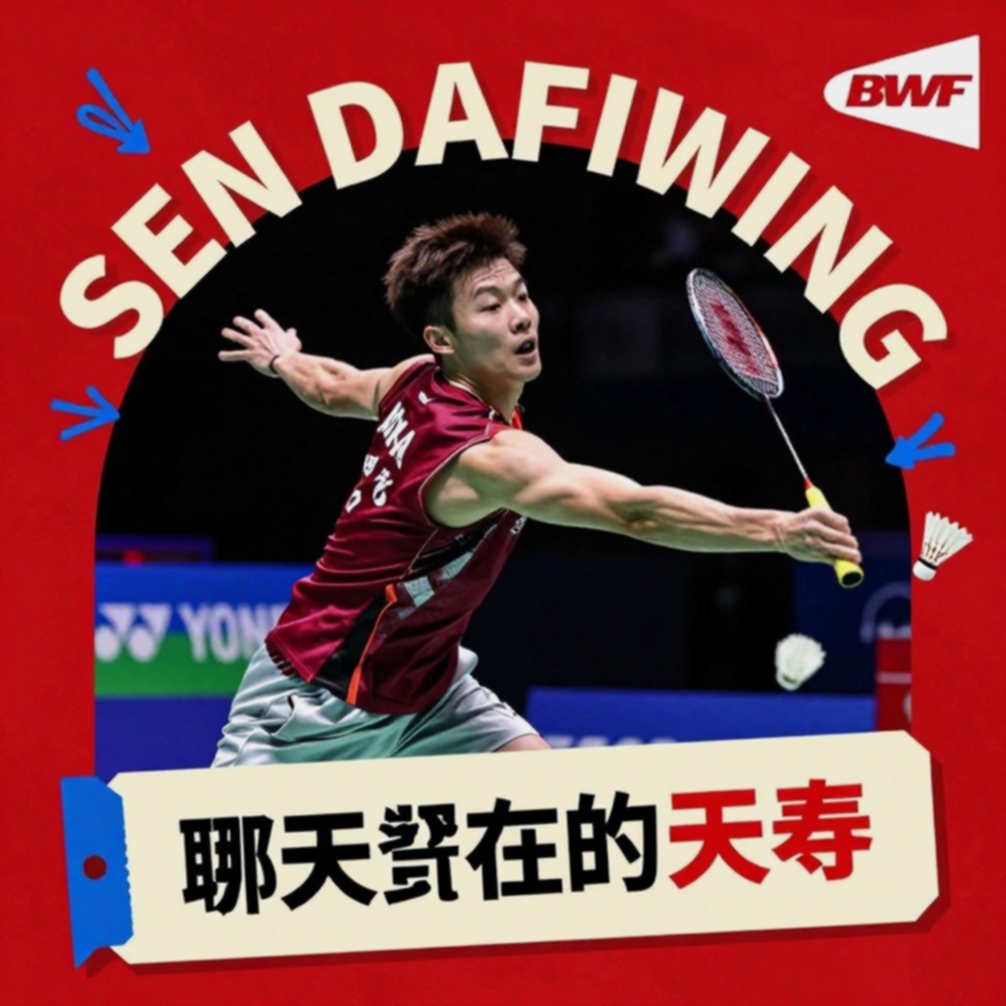
Short answer: based on the total purse of recent Hylo Open editions and BWF's published distribution scheme, the estimated champion's share works out to roughly US$14,700 — approximately ₹12.5–13 lakh at current exchange rates. To be explicit: the 2026 purse and the exact winner's share remain an estimate until confirmed through BWF's tournament prospectus, not a verified figure. We have maintained that distinction throughout this report.
The arithmetic
Hylo Open is played in Saarbrücken, Germany and sits on the BWF World Tour calendar. In recent editions it has been staged at Super 300 level, with a total prize purse of roughly US$210,000. Under BWF's distribution scheme the winner receives about 7 per cent of the total purse, which produces a champion's share of approximately US$14,700. Withholding tax and other deductions reduce the net figure further — a detail that routinely disappears from headlines.
Second, this is not a windfall. Badminton prize money is tier-linked: Super 1000 events carry purses in the millions, Super 500 below that, and Super 300 and lower rarely produce a player's career-best payday. For a player of Sen's profile, the value of a Hylo Open title lies in ranking points and Olympic-cycle positioning, not in the cheque. The 7,000–8,000 ranking points matter more than the dollars, because they determine seeding at the events that actually pay.
Reading the 39-minute final
Three numbers tell the story together: 21-17, 21-10, 39 minutes. Rallies were short. Extended exchanges were rare. Most tellingly, the opponent's in-match adjustment produced no traction — a player who reached 17 in game one collapsed to 10 in game two. That gap is structural, not a matter of form.
Control players win finals in this shape: one close game, then a widening one. Power players typically win with a single explosive game rather than two progressively broader ones. The detail matters because it shows Sen's 'Plan B' is functioning. When the first plan stalls, switching costs him understanding rather than energy — and in this final that understanding arrived by the end of game one.
The quarter-final is the real diagnostic
More diagnostically valuable than the final is the quarter-final: losing game one 14-21 to Kalle Koljonen, then reversing the match 21-17, 21-13. Losing an opening game by seven points to a materially lower-ranked opponent, then conceding only 30 points across the next two games, is not a conditioning story. Had the body been fading, the third-game margin would have narrowed, not widened. This is adaptation latency — reading the opponent's patterns late.
That is the good news, because it is coachable. The bad news is that at bigger events the delay is expensive: recovering from 14-21 in a Super 1000 quarter-final is far harder, because the level is higher and nobody hands back 30 points across two games. For the coaching staff the question is precise: how to accelerate pattern-reading from warm-up to the first-game interval.
Technical profile: slow deception in a fast era
Men's singles has shifted toward earlier attack, higher tempo and shorter rallies. Sen's profile is a minority in that environment: net-first control, heavy deception, rally-and-drop. The style works when the body cooperates and patience holds; it breaks when an opponent lifts the tempo so high that there is no time left for deception.
Against a power-attacking baseliner like Jonatan Christie, the style works precisely because Christie's attack needs to be 'set' — he requires a little space and a little time to load. Sen's net control removes both. The 39-minute final was the product of that equation: Christie never got the window to load.
But the same profile carries a physical ceiling — long matches. A three-game grind with long rallies and slow scoring is Sen's worst-case scenario, and the quarter-final demonstrated it. The final was, in this sense, his easiest match of the week: 39 minutes, short rallies, no fatigue. The real test will be weeks where he must play two or three three-game matches before the final.
The missing data is also a story
An honest analysis must concede a limit: no smash speed, average rally length, unforced-error rate or court-coverage data is publicly available for this tournament. BWF does not routinely publish that statistics layer at Super 300 level. Which means claims like 'Sen is back to his old level' currently rest on a scoreline and observation, not measurement.
The practical implication: read this title as a demonstration of in-week decision-making, not as a form revival. The first claim can break next week; the second can be repeated.
Where this sits in the career arc
Sen's career over five years shows a pattern — reaching big stages is easy, the last step is hard. World Championships bronze in 2026, an All England final in 2026, Commonwealth Games gold in 2026, and then a Paris 2026 semi-final followed by a lost bronze-medal match: fourth place. That fourth place is the hardest number in his record, because it measures the distance between 'almost' and 'done'.
A Hylo Open title does not close that distance, but it provides practice in closing it. Winning finals at Super 300 level builds the habit that matters at Super 500 and Super 750 semi-finals, where the pressure is not to win but to avoid losing. Sen's recurring weakness has been waiting at decisive points rather than seizing them. For one week, at least, this final suggested the habit is breakable.
Beyond the prize money
The answer to 'how much did he earn' is roughly ₹12.5–13 lakh — less than a first-round payday at a tennis Grand Slam. That is badminton's economic reality: even the world's best earn through sponsorships, leagues and federation support rather than prize money. In the Indian context, the Target Olympic Podium Scheme, SAI funding and private sponsors are what keep a player standing.
So the real return from Hylo Open should be measured in three things: ranking points that shape next season's seeding; psychological capital from a final won, which mattered after Paris; and visibility, which adds multiples of the prize cheque in sponsorship conversations.
What to watch next
Three things. First, the opening game over the next two tournaments — if 14-21 repeats, adaptation latency is confirmed; if first games sit near 21-15, this week was an outlier. Second, third-game performance in three-game matches, which indicates strategic rather than physical fatigue. Third, progress past the semi-final at a higher-tier event.
And a fourth: BWF's official prize-money breakdown. When it is published, the estimate in this report should be replaced by it. Until then, the most reliable number from Hylo Open 2026 is not the trophy — it is the scoreline: 21-17, 21-10, 39 minutes.