होमAsian CricketThe Changing Face of Asian Cricket: The T20 Explosion, Rising Powers and the Exhausted Player
Asian Cricket
The Changing Face of Asian Cricket: The T20 Explosion, Rising Powers and the Exhausted Player
एशियाई क्रिकेट का केंद्रीय तनाव टी20 लीगों के विस्तार और खिलाड़ियों के बढ़ते वर्कलोड के बीच है। 2008 में आईपीएल की शुरुआत के बाद पाकिस्तान सुपर लीग, लंका प्रीमियर लीग, बांग्लादेश प्रीमियर लीग, इंटरनेशनल लीग टी20 और नेपाल प्रीमियर लीग ने मिलकर एक बहु-लीग कैलेंडर बना दिया है, जिससे खिलाड़ियों की आमदनी बढ़ी है लेकिन चोट और मानसिक थकान के मामले भी बढ़े हैं। बीसीसीआई ने वर्कलोड प्रबंधन को औपचारिक बनाया है, जबकि अन्य बोर्ड अपने-अपने वित्तीय दबाव के अनुसार अलग रुख अपना रहे हैं। दूसरी बड़ी धुरी संगठनात्मक है: 1983 में स्थापित एशियाई क्रिकेट परिषद एशिया कप का संचालन करती है, जिसकी मेजबानी भारत-पाकिस्तान राजनीतिक तनाव के कारण बार-बार हाइब्रिड और तटस्थ स्थल मॉडल में बदलती रही है। तीसरी धुरी विकास की है — नेपाल, ओमान, यूएई, बहरीन और मलेशिया जैसे देश तेजी से ऊपर उठ रहे हैं, और महिला क्रिकेट तथा महिला प्रीमियर लीग ने एशियाई महिला खिलाड़ियों के लिए पहली बार व्यावसायिक रास्ता खोला है। चौथी धुरी 2028 लॉस एंजिल्स ओलंपिक है, जहां टी20 प्रारूप में क्रिकेट शामिल होगा; केवल छह पुरुष और छह महिला टीमों की संभावित भागीदारी एशिया में क्वालीफिकेशन को अत्यंत प्रतिस्पर्धी बना देगी और छोटे बोर्डों के लिए शासन तथा एंटी-डोपिंग मानकों को पूरा करना चुनौती होगा। अंत में, राजस्व वितरण में भारी असमानता एशियाई क्रिकेट की सबसे पुरानी संरचनात्मक समस्या है; विशेषज्ञ लक्षित निवेश — अंडर-19, महिला क्रिकेट, कोच शिक्षा और जमीनी ढांचे — को व्यावहारिक समाधान मानते हैं।
Asian cricket has not changed its face as fast as the structures around it have changed. The grounds are the same, the ball is the same, and the bat weighs roughly what it always did. What has changed is the calendar. The door that opened with the first season of the Indian Premier League in 2026 is now a corridor running through the Pakistan Super League, the Lanka Premier League, the Bangladesh Premier League, the International League T20 and the Nepal Premier League. For an Asian cricketer, the year no longer splits into two parts. It splits into six.
This shift is not purely commercial. It is rearranging the balance of power in Asian cricket as well. While traditional centres like India, Pakistan, Sri Lanka and Bangladesh hold their ground, countries like Nepal, Oman, the United Arab Emirates, Bahrain and Malaysia are edging toward a doorway that once took decades to reach.
The Asian Cricket Council is the oldest and steadiest part of this architecture. Founded in 2026 and headquartered in Kuala Lumpur, it still runs the Asia Cup, a tournament that has been played since 2026. The most interesting thing about the Asia Cup is that it has never stayed in one place. Sharjah, Colombo, Dhaka, Mirpur, and a split hosting arrangement between Pakistan and Sri Lanka have all featured. That instability is not weakness. It is a direct reflection of the political reality of Asian cricket.
The clearest illustration is the bilateral relationship between India and Pakistan. The two teams meet in ICC and ACC events, but a bilateral series has not been played for years. Even in events like the Asia Cup, the hosting model has to be renegotiated each time, producing hybrid formats and neutral venues. Administrators call it an arrangement, fans call it a necessity, and critics call it politics spilling onto the field. Whatever the truth, the Asian calendar cannot be built without accounting for that uncertainty.
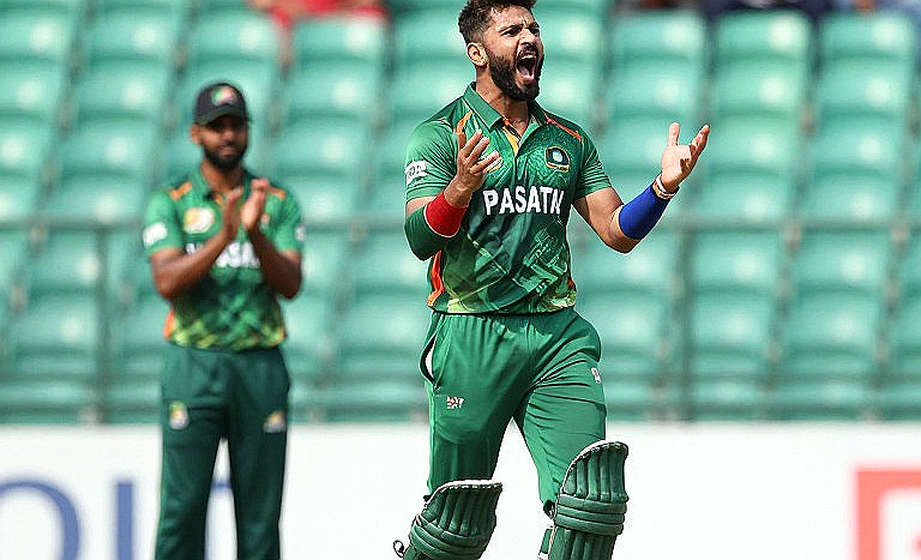
Against this political deadlock, one thing keeps moving forward: the expansion of T20 leagues. The IPL is now the most valuable property in world cricket, and its influence does not stop at India's borders. The Pakistan Super League played a central role in bringing Pakistani cricket back to home soil. The Lanka Premier League gave Sri Lankan cricket a reliable revenue stream after a financial crisis. The Bangladesh Premier League guaranteed foreign player presence in Dhaka. The International League T20 turned the UAE into a permanent home for top-level cricket in the early months of the year.
What is least appreciated about this expansion is that it has created a new economy for Asian cricketers. Once, a domestic player's income came mainly from a national contract and domestic match fees. Now a good T20 specialist can play in three or four countries and earn many times that. It has made cricket a viable profession, but it has also raised a second question.
That question concerns the player's body and mind. In recent years, the injury list in Asian cricket has grown longer. Fast bowlers report more knee, back and shoulder problems. Batters struggle to adjust between changing pitches, different balls and different conditions. Several boards have tightened the conditions under which centrally contracted players may appear in leagues, and several players have chosen to rest from bilateral series because of workload. This is not a moral crisis. It is an economic and physical equation that every board is solving in its own way.
India has taken the most explicit position. The BCCI has formalised workload management, capping the number of days a player can feature in a year and requiring prior approval for league participation. The Pakistan Cricket Board has also revised its central contract rules, allowing players to appear in foreign leagues while keeping national duty paramount. Sri Lanka and Bangladesh have moved in the same direction, though financial pressure gives their boards a different bargaining position.
There is a third dimension that gets less attention: the physio and sports science infrastructure. Several Asian nations do not have a permanent sports science team attached to the national side. Leagues generally offer better facilities because the investment is larger. The odd consequence is that some players receive a higher standard of medical support through a league than through their own national setup. Over time, that gap can become a serious inequality.
The most encouraging story, meanwhile, is coming from outside the field. The progress made by Asia's associate member nations over the past few years is unusual in the history of the sport. Nepal is the clearest example. The crowds in Kathmandu have shown that cricket's popular base is not confined to Test-playing nations. The Nepal Cricket Association has endured repeated turbulence at the administrative level, but the team's performance and the public's affection have kept moving forward together.
Oman and the UAE have taken a different route. Both benefit from a large expatriate population, and their squads include players and descendants of players from India, Pakistan, Sri Lanka and Bangladesh. That has made them a case study in talent development models. One camp argues it rapidly raises the standard of the team; another argues it limits opportunities for homegrown players. The truth is probably somewhere in between, but in the meantime both sides have produced performances at Asia Cup and World Cup qualifier level that count as milestones for any associate nation.
Bahrain, Malaysia, Qatar and Cambodia are now walking a road that Nepal and Oman were on a few years ago. ICC global development programmes and ACC associate-level competitions have given them a clearer path. The implication is that the biggest Asian cricket story of the coming years may not be written among the top four teams, but within this newer layer.
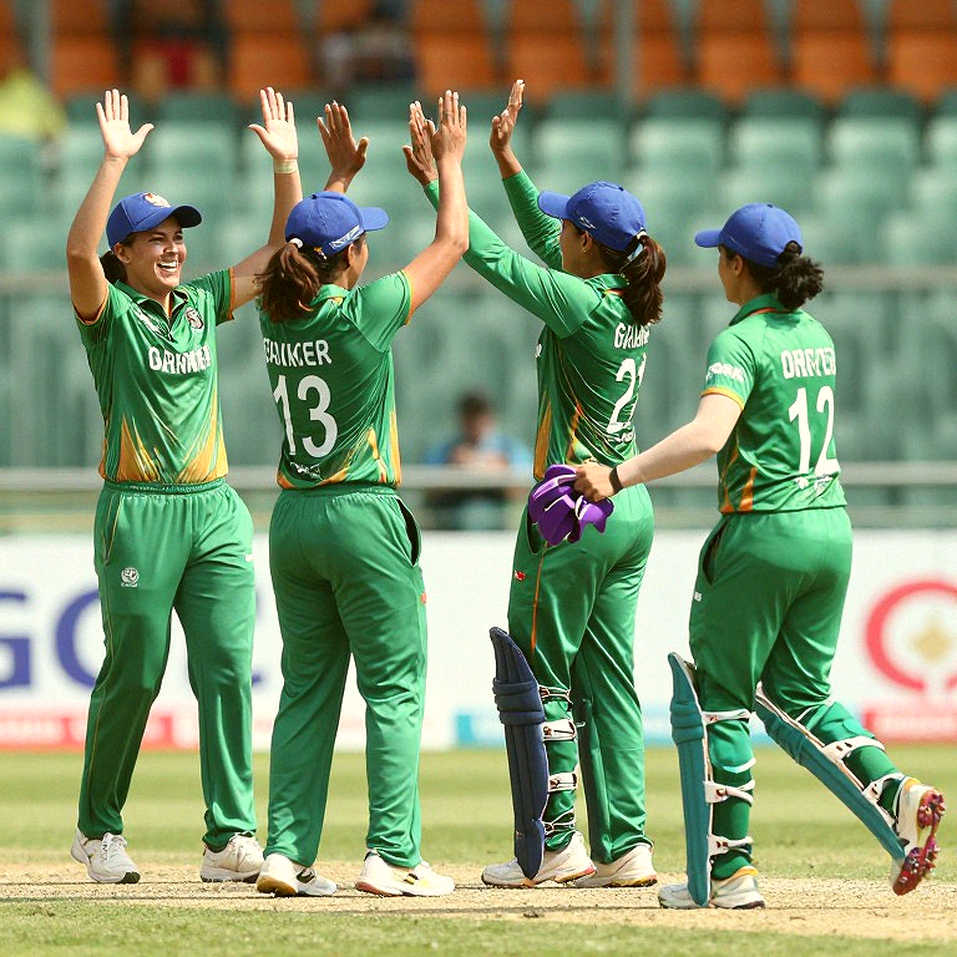
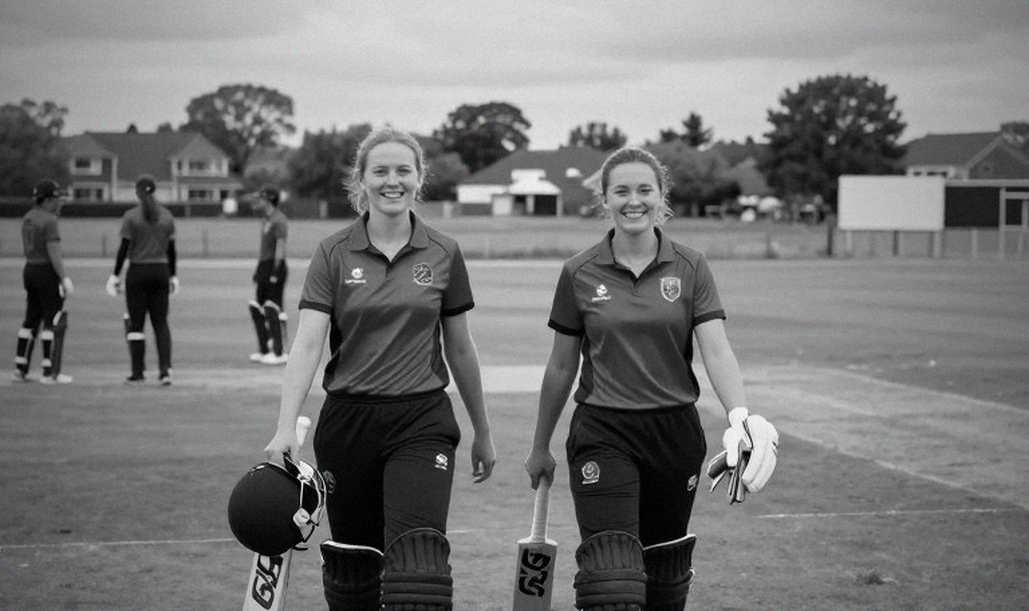
One more piece belongs in this picture: women's cricket. Asian women's cricket has received less attention than the men's game, but its expansion is just as rapid. The Women's Asia Cup is now a regular fixture and the standard across several teams is rising steadily. India have consolidated their position globally, Pakistan and Sri Lanka remain competitive, and Bangladesh and Nepal are accumulating international experience.
The launch of the Women's Premier League has created a professional pathway for Asian women cricketers that did not previously exist, and the effect is visible in domestic structures. More girls are choosing cricket as a career, state associations are being pushed to allocate separate budgets for women's tournaments, and the number of women in coaching roles is increasing. The change is slow, but the direction is clear.
Then there is the development that has redefined the entire Asian calendar: cricket's return to the Olympics. Cricket will feature at the 2028 Los Angeles Games in the T20 format, a decision taken by the International Olympic Committee in 2026. The impact will be felt most in Asia, simply because more than half the nations that play T20 cricket are on this continent.
Only six men's and six women's teams are expected to be accommodated. That makes Olympic qualification a separate and far tougher competition in Asia. For the ACC it is both an opportunity and a challenge. An opportunity because governments will now view cricket as an Olympic sport and funding may rise in countries that previously did not prioritise it. A challenge because the qualification system must be designed so that associate nations are not locked out.
There is another Olympic dimension: standards of facilities and governance. The Olympic movement demands a different level of anti-doping compliance, anti-corruption monitoring, athlete safety and administrative transparency. Meeting those standards will not be easy for several smaller Asian boards. This is where the ACC and ICC matter, because with support the gap can narrow, and without it the gap will widen.
Now the part that is discussed least and matters most: money and how it is shared. A large share of Asian cricket's revenue flows to a single board. IPL broadcast rights, India's media deal and the sale of bilateral series all generate income distributed in a highly unequal ratio. ICC revenue distribution is contested every cycle, with smaller boards consistently arguing they do not receive the share needed to grow the game globally.
The same argument is repeated inside the ACC. Associate nations say hosting rights and revenue are distributed in proportion to traditional strength, while their needs are different. Larger boards respond that their contribution to generating revenue is proportionally greater too. That debate will never be fully resolved, but there is a practical answer: targeted investment. Directing money where the growth potential is highest, in Under-19 and women's cricket, coach education and grassroots pitches.
At the grassroots level, another change is worth noting. The number of cricket academies in major Asian cities has grown sharply, many equipped with biomechanics labs, video analysis and fitness testing. That shortens the path to professionalism, but it also creates an expensive divide. Families with resources can access better facilities; those without depend on government or board-run facilities whose quality varies widely. Keeping cricket democratic is the real challenge here.
One figure should sit at the centre of this debate and is often ignored. Asia is the world's most populous continent and cricket is among its most popular sports, yet Asia's share of global cricket resources does not match that population. The imbalance is not only about money but about opportunity. If Asia's associate nations received the same technical support, coaching assistance and match exposure that the larger boards do, the gap in standards could close years faster.
Back to the player. In the coming years, the biggest question for an Asian cricketer will not be which league to play but which to skip. The calendar is so full that playing everything is no longer possible for any leading player. Selection has therefore become part of strategy, not merely fitness. Boards, coaches and players must jointly decide which tournament is the priority and which can be sacrificed.
There is a positive side to this. It gives players control over their own careers in a way they did not have before. Boards used to decide who played where. Now players have options, and those options carry a price. To retain them, boards are being forced to offer better contracts, better medical support and better retirement security. That shift is uncomfortable for cricket's older structures but necessary for the player.
Another issue now taken more seriously is mental health. Constant travel, living in bubbles and social media scrutiny of every innings have created pressure earlier generations never knew. Several Asian cricketers have spoken about it publicly, which is a healthy change. Boards are now including psychological support in central contracts, though in many places it is still treated as a formality rather than a priority.
Technology matters too. DRS and ball tracking are now standard in nearly every major Asian tournament, and they have changed bowling strategy. Spin bowlers, long the signature of Asian cricket, now deliver knowing every ball is being analysed. That has reduced the element of mystery and increased the premium on skill. It is good for the game, but harder for bowlers who once survived on unpredictability.
The variation in pitches and weather remains a permanent feature. Sharjah's flat surfaces, Dhaka's slow and spin-friendly tracks, Colombo's humidity, Kathmandu's altitude and Dubai's heat together create an environment where adaptability is the defining skill. Foreign coaches frequently say that playing in Asia demands a different kind of mental preparation, and the data now supports that observation.
Looking ahead, three priorities stand out for Asian cricket. First, rationalising the calendar so that international fixtures, domestic tournaments and leagues collide less often. Second, giving associate nations not just places in tournaments but a share of training, infrastructure and match exposure. Third, integrating women's cricket into domestic structures with the seriousness that men's cricket has always received.
None of these will be completed in a year. But the beauty of Asian cricket is that it has always moved at its own pace despite external pressure. Night matches in Sharjah, noise in Dhaka, rain in Colombo and crowds in Kathmandu together form an ecosystem found nowhere else. The question is whether that ecosystem can be made strong enough for both T20 money and Test tradition to hold their ground.
The answer probably lies with the boards that are most powerful today. If they stop viewing revenue distribution as their share and start viewing it as investment in the whole ecosystem, Asian cricket's next decade could be far better than its last. If they do not, the T20 explosion will continue, but its benefits will remain confined to a handful of countries.
What is certain for now is that Asian cricket is no longer a single story. It is several stories at once. One belongs to the player who plays three leagues a year to secure his family's future. Another belongs to the board fighting to protect its domestic structure. A third belongs to the country hoping to reach a World Cup for the first time. And a fourth belongs to the fan who watches a Test in the morning and a league at night. Holding all of them together is the real test of Asian cricket administration, and that test has only just begun.